
The modern era is defined by a paradox: we are more connected than any generation in human history, yet we are experiencing an unprecedented fragmentation of the self. As we explore the intersections of art, technology, and transhumanism, we often focus on what we can add to the human experience—chips, interfaces, and algorithms. However, the most radical evolution of the twenty-first century might not be what we integrate into our bodies, but what we choose to exclude from our minds. Digital minimalism is not a regressive movement toward the “stone age”; it is a sophisticated, strategic reclamation of cognitive sovereignty.
In a world where our attention is the most valuable commodity, being “hyper-connected” often means being “hyper-distracted.” The average individual interacts with their device thousands of times a day, creating a psychological tether that reshapes neural pathways. To stay truly human in this environment, we must transition from being passive consumers of digital noise to being intentional architects of our own digital ecosystems.
The Neurobiology of Modern Fragmentation
The human brain, evolved over millennia for survival in a physical world, is currently struggling to process the infinite, high-velocity data streams of the digital age. Every notification, “like,” and infinite scroll triggers a micro-release of dopamine, creating a feedback loop that rewards distraction rather than depth. This constant state of low-level “fight or flight” response—driven by the fear of missing out (FOMO)—erodes our capacity for deep work and profound contemplation.
When we lose our ability to focus, we lose our ability to create meaningful art and engage in complex philosophy. The “cyborg” evolution we often discuss isn’t just about hardware; it’s about how our software—our consciousness—interfaces with the tools we build. If our tools dictate our thoughts through algorithms designed for engagement rather than enlightenment, we are no longer the masters of our evolution. Digital minimalism serves as a necessary buffer, ensuring that the technology serves the human, and not the other way around. By intentionally narrowing the digital pipeline, we allow our prefrontal cortex to regain its role in executive function, leading to higher levels of creativity and emotional intelligence.
Reclaiming Cognitive Sovereignty through Intentionality
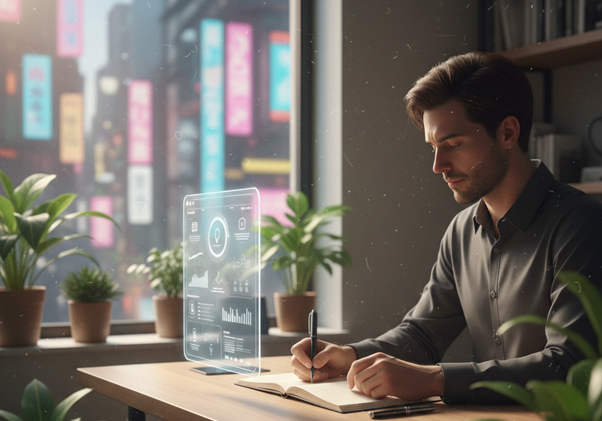
True digital minimalism is not about a total “digital detox,” which is often a temporary and ineffective solution. Instead, it is about establishing a philosophy of technology use that prioritizes long-term value over short-term stimulation. This requires an honest audit of our digital habits. We must ask: “Does this specific tool or platform support my deepest values, or is it merely a source of friction disguised as convenience?”
In the context of media art and transhumanism, intentionality is everything. A digital artist who spends six hours mindlessly browsing social media is not “gathering inspiration”; they are diluting their unique perspective with the homogenized aesthetic of the algorithm. To produce work that is truly avant-garde, one must cultivate the “analog sanctuary”—a mental space free from the influence of curated feeds.
To implement this philosophy, one must adopt a rigorous framework for digital engagement. This involves more than just deleting apps; it requires a structural shift in how we perceive our time. We can utilize specific strategies to regain control:
- The Gray-Scale Shift: Changing your phone’s display to grayscale to neutralize the dopamine-triggering effects of colorful icons.
- Analog Mornings: Dedicating the first hour of the day to physical reality—reading, writing, or movement—before engaging with any digital interface.
- Single-Tasking as a Radical Act: Consciously rejecting the myth of multitasking by focusing on one complex project for ninety minutes without interruption.
- The “Information Diet”: Curating high-quality, long-form content sources and unsubscribing from all algorithmic discovery feeds.
- Physical Boundaries: Establishing “tech-free zones” in the home, particularly in the bedroom and dining area, to protect human-to-human connection and restorative sleep.
The Path Toward a New Digital Renaissance
As we move further into a future where the lines between the biological and the digital continue to blur, the practice of digital minimalism becomes an essential survival skill. It is the foundation of what we might call the “New Digital Renaissance.” In the original Renaissance, the focus was on the expansion of human potential through the marriage of art and science. Today, that potential is being stifled by the very tools meant to expand it.
By reclaiming our attention, we allow for the return of “slow culture.” This is where the most profound innovations in media art and technology occur—not in the frantic rush of a trending topic, but in the quiet, focused hours of a creator who has mastered their tools. Staying human in a hyper-connected world does not mean disconnecting; it means connecting with purpose. It means choosing the depth of a single, well-crafted thought over the shallow breadth of a thousand digital echoes.
Ultimately, the goal of integrating technology into our lives should be the enhancement of the human spirit. If our devices make us more anxious, less focused, and more polarized, they are failing in their primary mission. Digital minimalism is the corrective lens that allows us to see the digital landscape for what it is: a vast, powerful toolset that requires a disciplined hand to operate. By embracing this discipline, we ensure that as we evolve into the future, we carry the best parts of our humanity—our empathy, our focus, and our capacity for wonder—along with us.