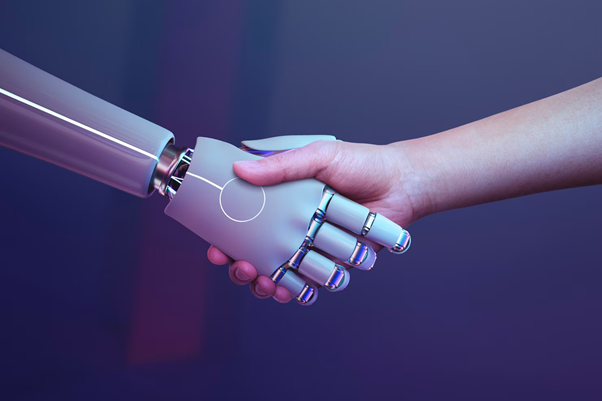
Human evolution has always been tethered to the tools we create. On natasha.cc, we discuss how transhumanism and digital art redefine the boundaries of our biological existence. Now, this intersection finds a high-stakes application in iGaming. The “gut feeling” of the seasoned gambler is being replaced by something more precise: the AI betting coach. This isn’t just a software update; it’s a shift in how we process risk and probability in a hyper-connected world.
An AI betting coach serves as a cognitive bridge, allowing a human player to access the processing power of a supercomputer. While humans spend hours analyzing one team, an algorithm synthesizes millions of data points instantly. This includes player biomechanics, real-time weather fluctuations, and even sentiment analysis from social media feeds. The result is a shift from speculative gambling to a form of “data-driven investment,” where every decision is backed by a mathematical model designed to find the slightest edge over the house.
The Architecture of Algorithmic Intelligence
The true power of an AI coach lies in its ability to identify non-linear relationships. A human might notice a team plays poorly after flying. An AI, however, can calculate the exact correlation between a 10-hour flight, a specific humidity level, and the historical fatigue patterns of a 24-year-old midfielder. By utilizing neural networks and predictive modeling, these systems simulate a game thousands of times before the first whistle blows. This reveals ‘Expected Value’ (EV)—showing whether odds are mathematically favorable.
To function effectively, these silicon mentors rely on a rigorous framework of data processing. This framework provides actionable intelligence. A high-performance AI coach typically operates using the following core components:
- Multivariate Data Scraping: Pulling live statistics from diverse global databases simultaneously to ensure the model is never working with stale information.
- Probabilistic Simulation: Running Monte Carlo simulations to account for the inherent randomness of sports and gaming outcomes.
- Cognitive Offloading: Moving the burden of complex mental calculations from the human brain to the processor, reducing decision fatigue.
- Hyper-Personalized Risk Profiles: Tailoring betting suggestions to the specific bankroll and tolerance levels of the individual user.
As these tools become more sophisticated, they require a digital infrastructure that can match their speed. There is no point in having a millisecond-perfect algorithm if the platform you are using is slow or prone to administrative delays. This technical necessity drives many advanced users to seek out the most efficient financial environments. In this high-velocity landscape, many tech-savvy players prioritize using http://playfortunepl.com/kasyno/z-szybkimi-wyplatami/ to ensure that their data-driven victories are translated into liquid assets as quickly as possible. The synergy between a fast algorithm and a fast payout system is what defines the elite tier of modern digital wagering, turning a theoretical advantage into a tangible reality without the friction of traditional banking wait times.
Overcoming the Biological Barrier
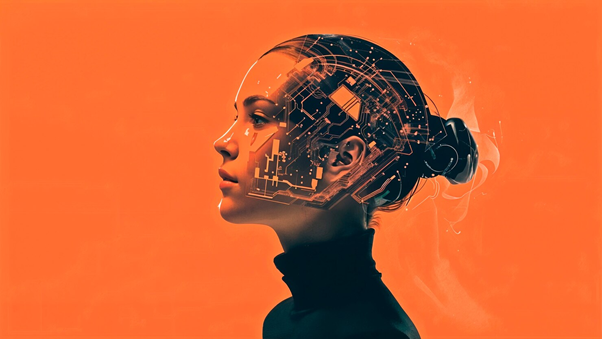
Perhaps the most significant contribution of AI to the betting world is the elimination of emotional bias. The human brain is notoriously bad at dealing with randomness. We are hard-wired to see patterns where none exist—a phenomenon known as apophenia. We suffer from the “gambler’s fallacy,” believing that if a coin has landed on heads five times in a row, it is “due” to land on tails. An AI coach is immune to these glitches. It ignores the sting of loss, seeing only probabilities.
This stoic approach to risk management allows for a level of consistency that is biologically impossible for a human to maintain. By offloading the emotional burden to an algorithm, the player can maintain a “transhumanist” perspective—acting as the executive director of a digital system rather than a victim of their own neurochemistry. This partnership allows the human to focus on the overarching philosophy of their strategy while the AI handles the cold, hard execution.
A sophisticated AI also examines the game’s environment. It can navigate the complex labyrinth of casino terms, bonuses, and turnover requirements to find the path of least resistance. For a player looking to maximize their long-term sustainability, an AI might suggest focusing on low wagering casinos where the mathematical hurdle to clear a bonus is significantly lower than average. This type of granular optimization ensures that every dollar in the bankroll is working at its maximum efficiency, protecting the player from predatory terms that a human might overlook in the heat of the moment. This ensures a sustainable and calculated approach to the gaming experience.
The Future of the Human-AI Symbiosis
We are entering an era where the boundary between the player and the platform is becoming increasingly thin. As AI coaches move from standalone apps to integrated wearable technology, the experience of “betting” will become a seamless part of our digital reality. Imagine an augmented reality interface that highlights “value bets” as you watch a live game in a virtual stadium. The human remains the final decision-maker, but they are empowered by a digital clarity that was previously unimaginable.
Ultimately, the goal of integrating AI into the betting experience is not to eliminate risk—for without risk, there is no game—but to elevate the quality of the decisions we make. It is a refinement of the human spirit through the lens of machine precision. By embracing these silicon sidekicks, we are not just playing a game; we are participating in the next stage of our technological evolution. We are learning to dance with the algorithm, balancing the heat of our passions with the cool, bright light of infinite data. In this new world, the winners won’t be the luckiest; they will be the best connected and most prepared.